Sealed Seams. Quiet Readings. Built to Spec.
Shielded Enclosures for Every Lab, Device and Facility
Heavy-duty shielded enclosures for EMC test labs, wireless and IoT device makers, digital forensics teams, and secure and medical facilities. They keep outside RF out and your signals in, from a benchtop shield box to a walk-in room.
How shielding works
A conductive box with every opening sealed
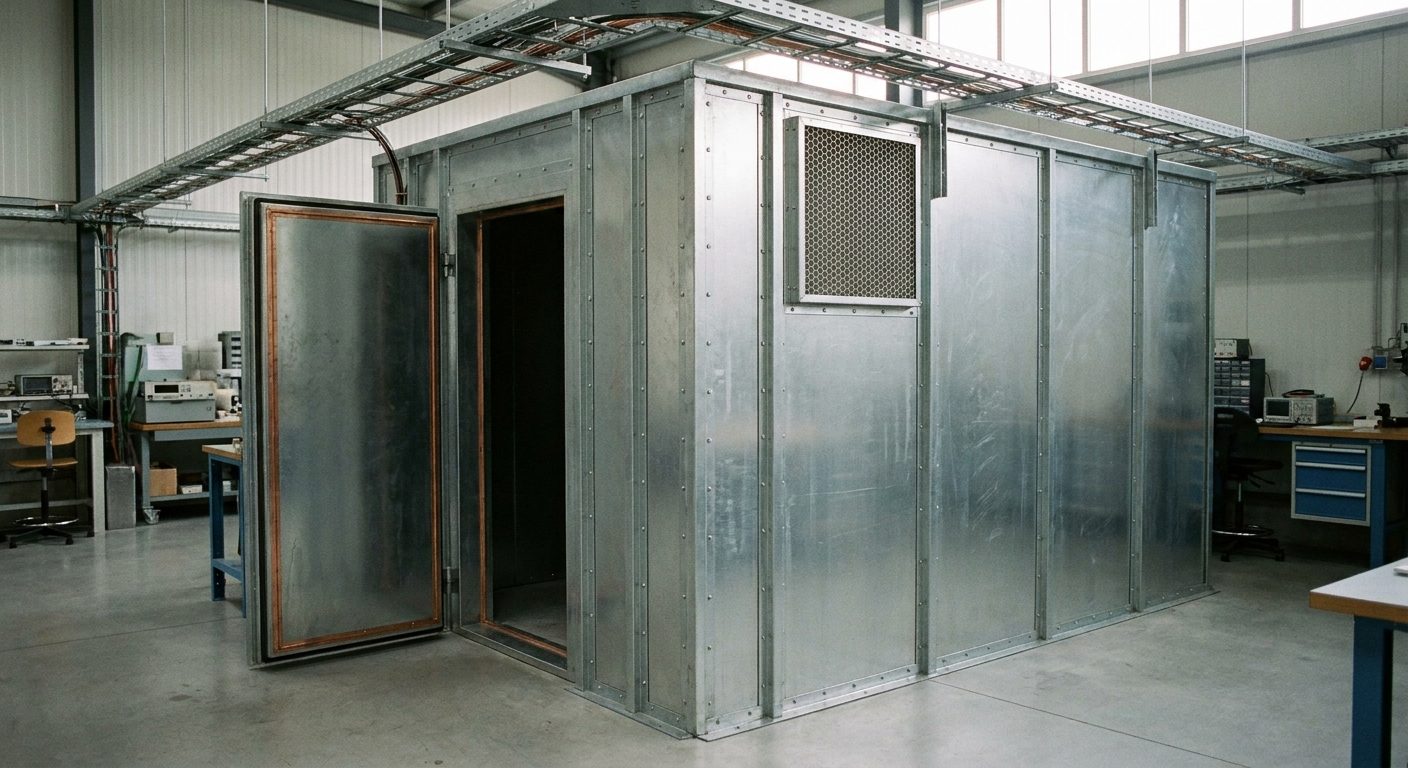
A shielded enclosure is a box, cabinet, tent, or room whose walls form one continuous conductive surface, the same idea as a Faraday cage. Radio waves that reach it are mostly reflected, and what gets into the metal is weakened before it reaches the other side.
The hard part is everything that has to pass through the wall: people, cables, air, and light. Each opening is a potential leak, which is why doors, filters, and vents get as much engineering as the walls themselves.
Part 1
Reflection
A continuous conductive skin reflects most of an incoming radio wave at its surface. This is the main effect for electric fields and plane waves across most of the RF spectrum.
Part 2
Absorption
Whatever energy gets into the wall is weakened as it travels through the metal. Thicker walls and magnetic metals absorb more, which matters most for low-frequency magnetic fields.
Part 3
Closing the gaps
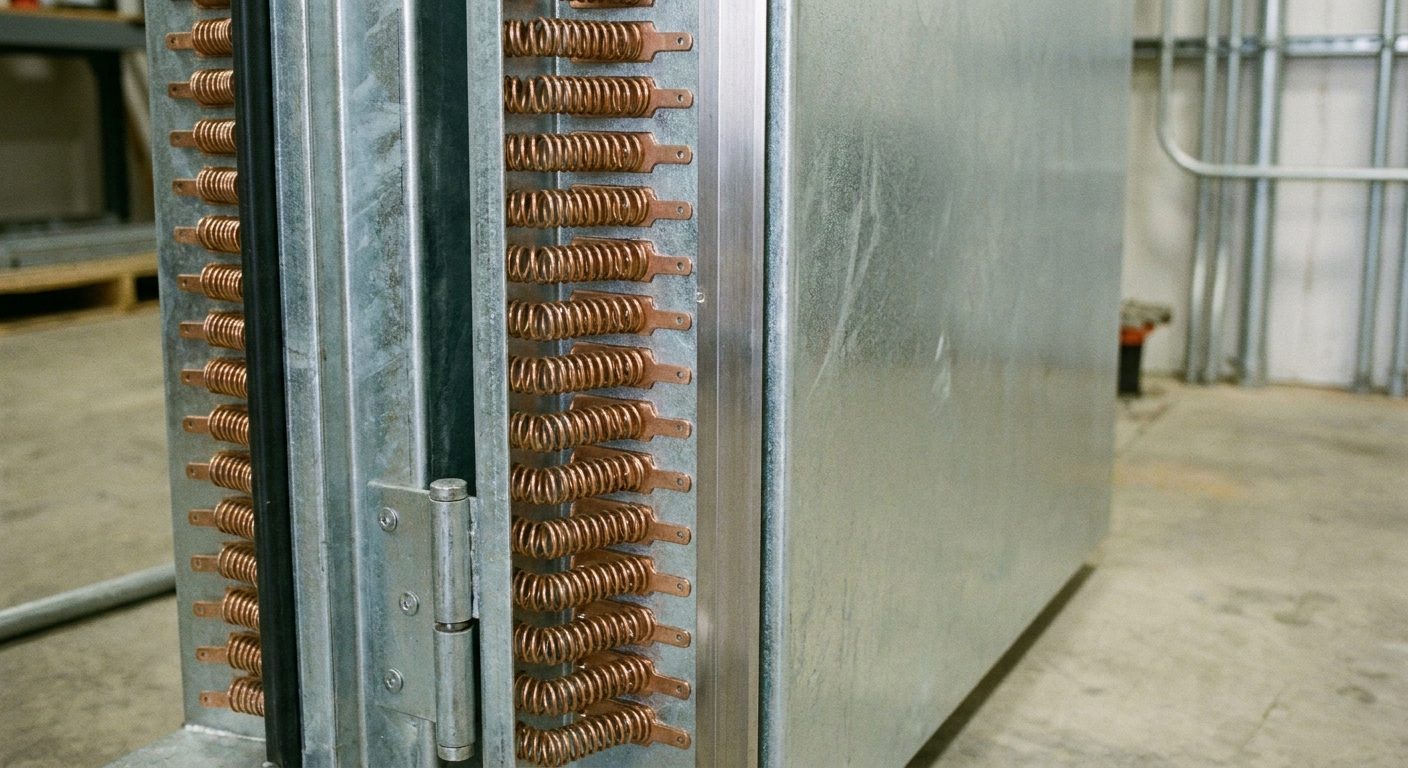
In practice the walls are rarely the weak point. Seams, doors, cable entries and air vents are where signals leak, so a good enclosure is mostly a story of how its openings are sealed.
Shell
Galvanized steel, copper, aluminum, or metallized fabric, joined so that the conductive surface is continuous all the way around.
Door and gaskets
A door that clamps onto a conductive seal, such as beryllium-copper finger stock, knife-edge contacts, or an inflatable seal on high-performance rooms.
Filters and feedthroughs
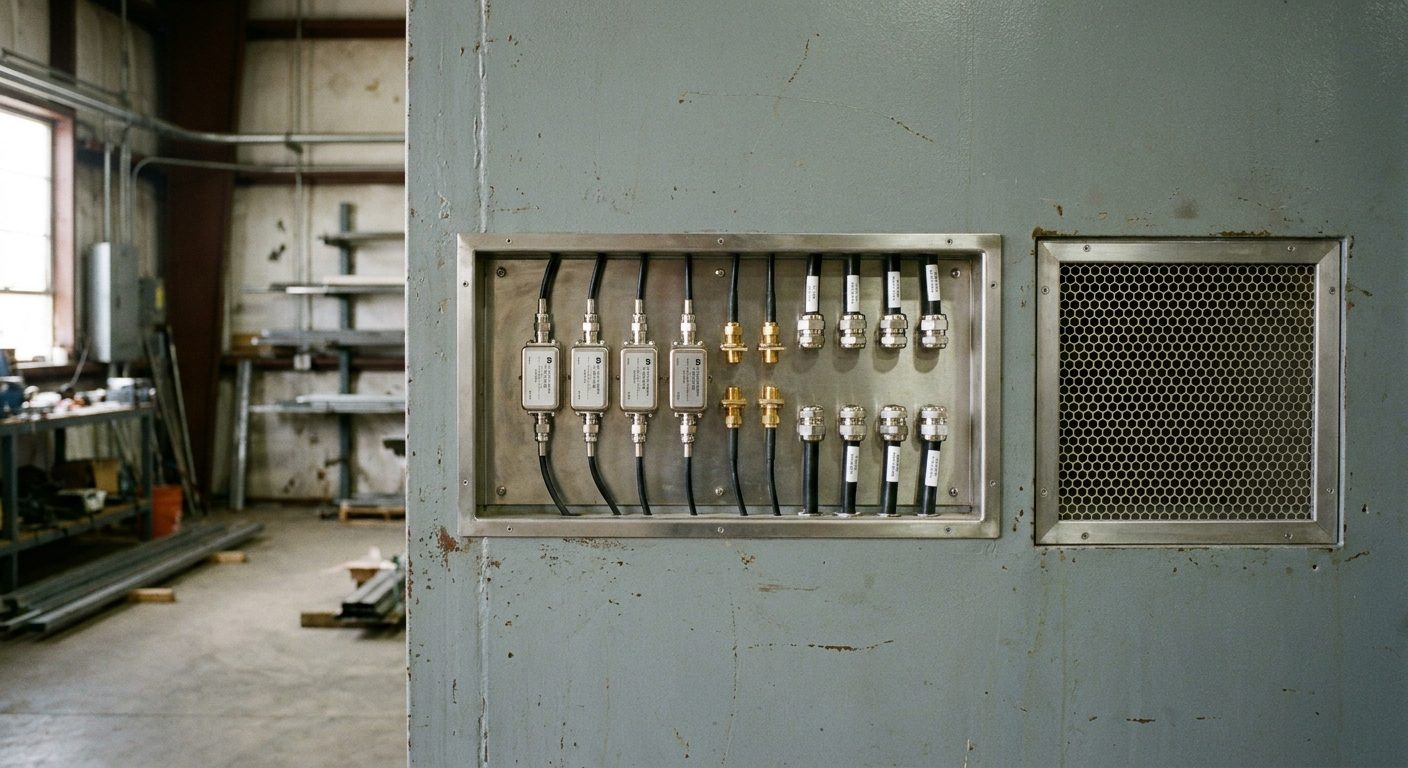
Power and signal lines pass through filters mounted in the wall; data often goes through fiber optic feedthroughs, which carry no RF current at all.
Vents
Honeycomb waveguide vents let air in and out while blocking frequencies below the cutoff set by the cell size and depth.
Attenuation and frequency
Reading a shielding specification
Shielding performance is given in decibels: how much weaker a signal is inside the enclosure than outside. It is quoted across a frequency range, and often separately for magnetic fields, electric fields, and plane waves, because an enclosure that blocks one well may block another less well.
Shielding effectiveness
SE (dB) = 20 × log10 (field without shield ÷ field with shield)
Every 20 dB is a tenfold drop in field strength. Low-frequency magnetic fields are the hardest to block and usually need thicker or magnetic metals. Ask the manufacturer how their figures are measured, and at which frequencies.
What a dB figure means
- 20 dB
- Field reduced to 1/10
- 40 dB
- 1/100
- 60 dB
- 1/1,000
- 80 dB
- 1/10,000
- 100 dB
- 1/100,000
Field-strength ratios follow from the formula above. They describe what a rating means, not what any particular enclosure achieves.
Enclosure types
From shield boxes to shielded rooms
Every type puts a conductive barrier around something. They differ in size, in how people and equipment get in and out, and in how permanent they are.
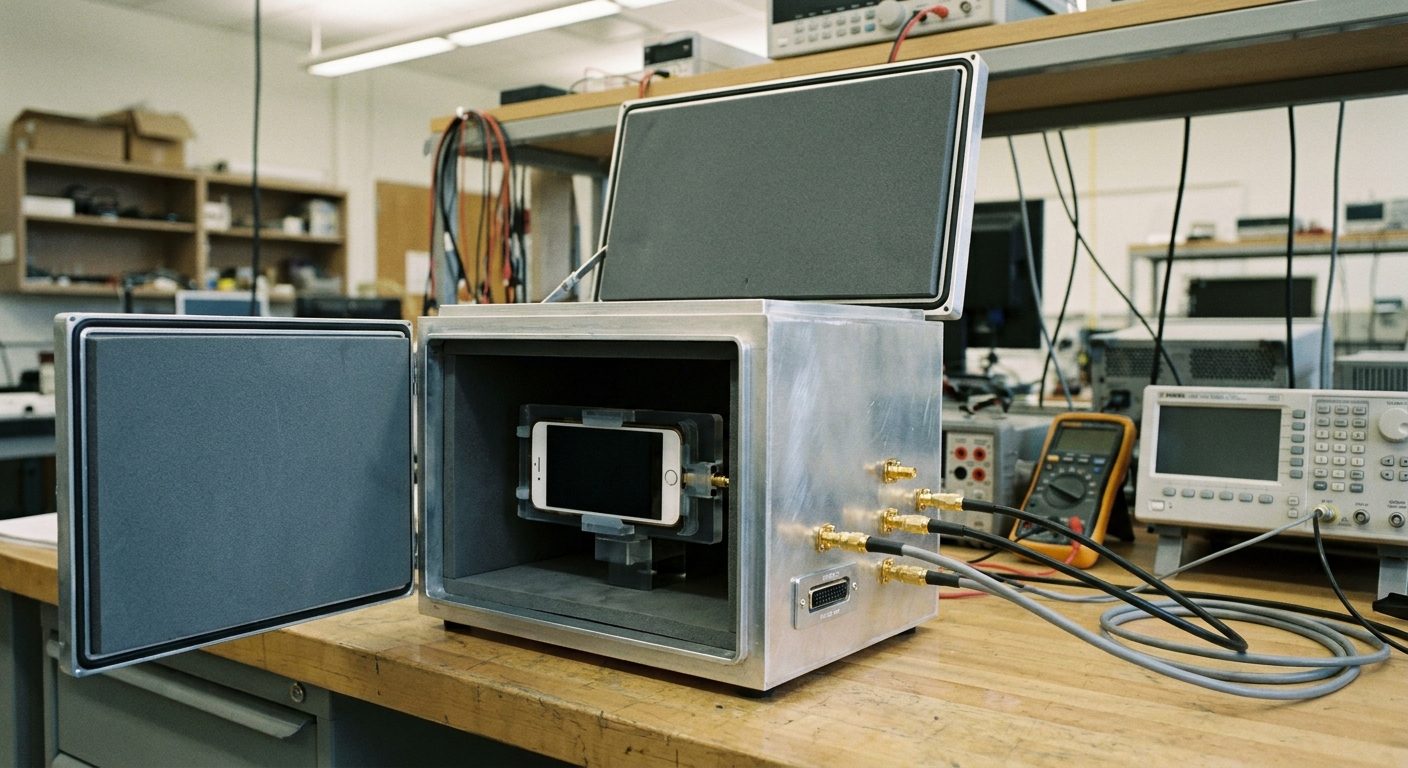
Benchtop RF test enclosures (shield boxes)
A closed metal box that sits on a bench or in a test rack, sized for one device or a circuit board. Device makers use them to test phones, radios, modules, and IoT products without interference from nearby transmitters, and to keep the device's own signal from leaking out.
- Absorber lining inside to cut reflections around the device under test.
- Filtered I/O panel for RF, USB, Ethernet, power and other connections.
- Manual, pneumatic, or automated lids for lab work or production lines.
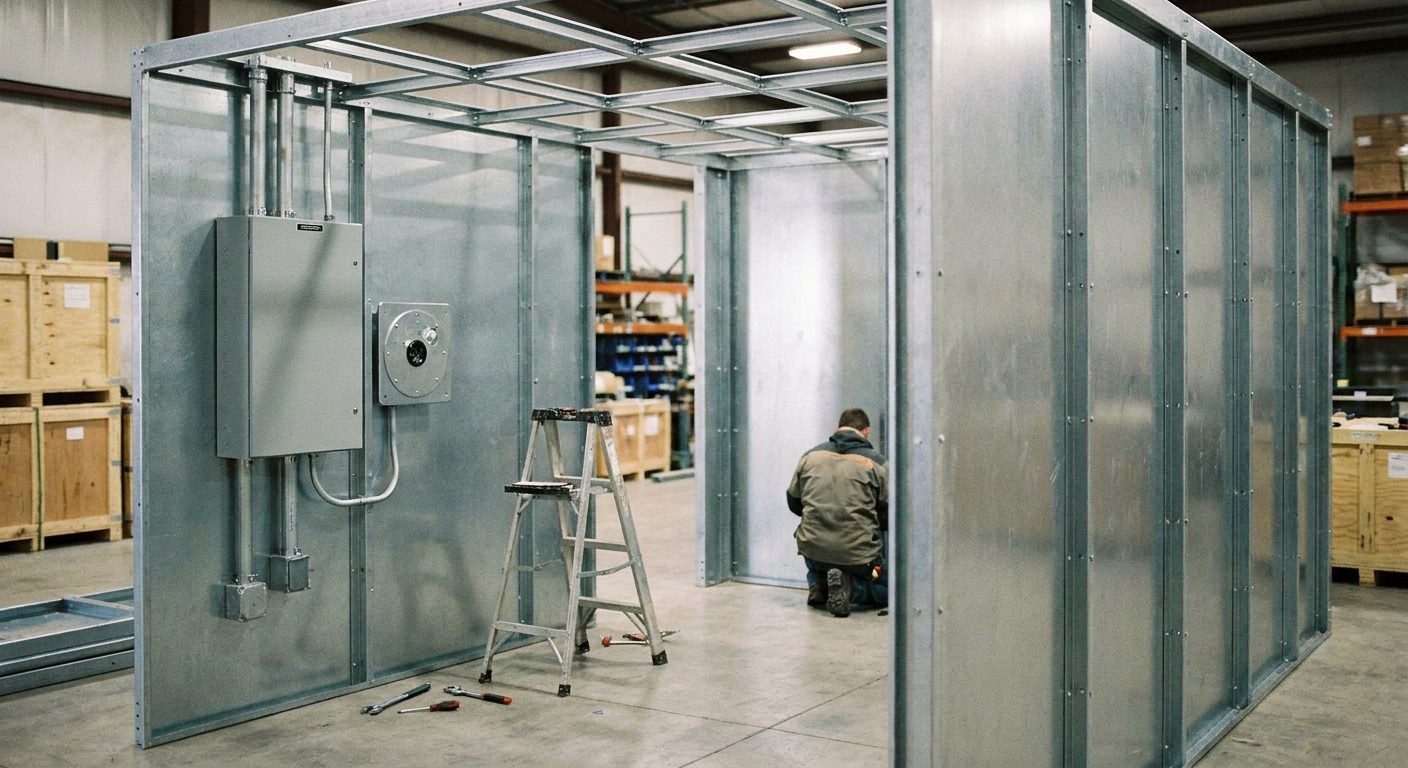
Walk-in shielded rooms and screen rooms
Rooms large enough for people, test benches, and full-size equipment, usually assembled from bolted modular panels inside an existing building. EMC labs, research groups, and secure facilities use them when the thing being tested or protected will not fit in a box.
- Modular steel panel construction, or copper or steel foil built into the room for custom shapes.
- Doors, filters, vents, and penetrations planned into the layout from the start.
- Can be lined with RF absorber to become a semi-anechoic or fully anechoic chamber.
Faraday tents and portable enclosures
Shielded rooms made from metallized fabric over a frame, with double-zip or sealed entries. They fold for transport and set up where a rigid room is not practical, such as field forensics or a temporary test area.
TEMPEST and SCIF enclosures
Shielded rooms and cabinets that keep emissions from computers and communications equipment from being picked up outside. SCIF construction in the US follows ICD 705, with RF shielding where the threat assessment calls for it.
MRI RF shielding rooms
A copper or steel shield built into the walls, floor, and ceiling of an MRI suite so outside RF does not show up in the images. Scanners work at radio frequencies, around 64 MHz for a 1.5 tesla magnet and 128 MHz for 3 tesla.
Shielded racks and cabinets
Electronics enclosures and 19-inch racks with gasketed doors, filtered entries, and shielded vents, for equipment that has to meet emissions limits or resist interference in place.
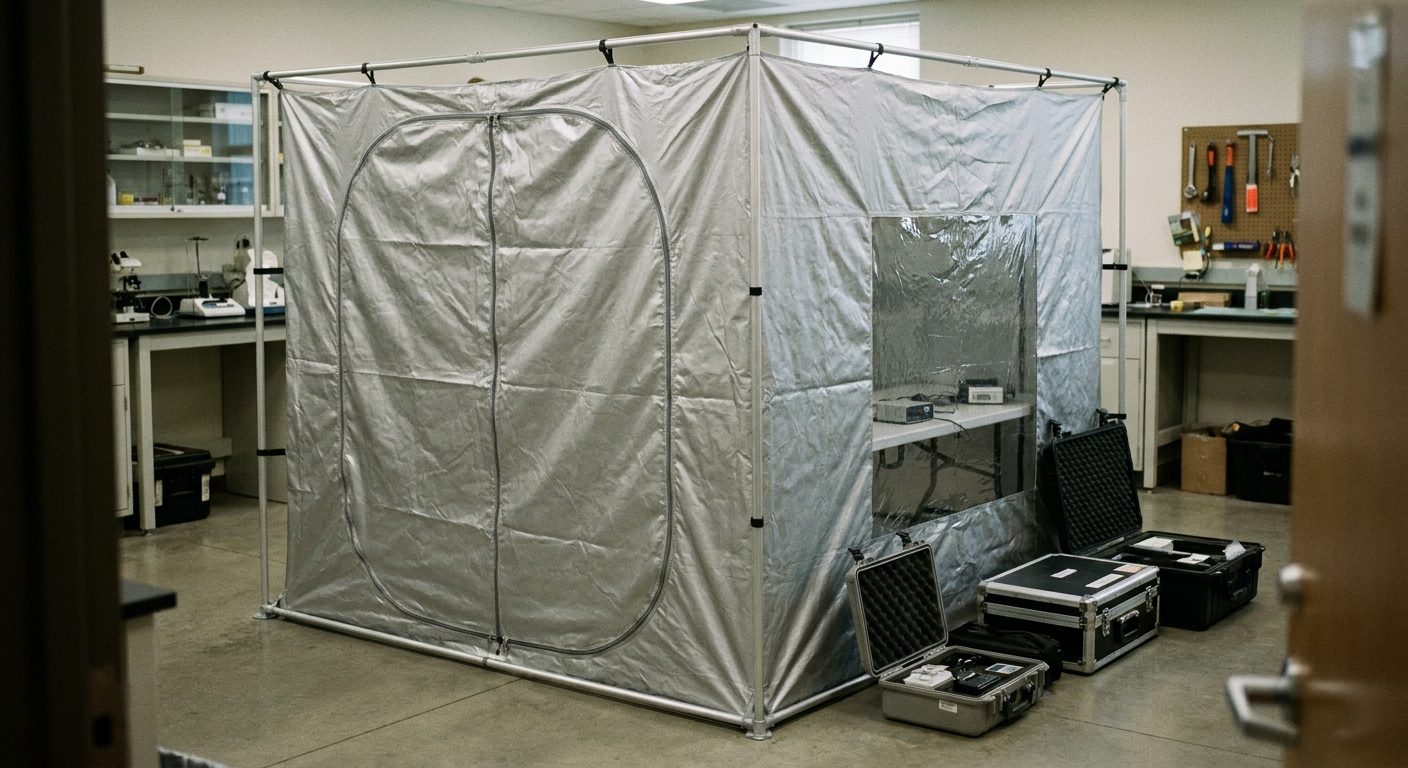
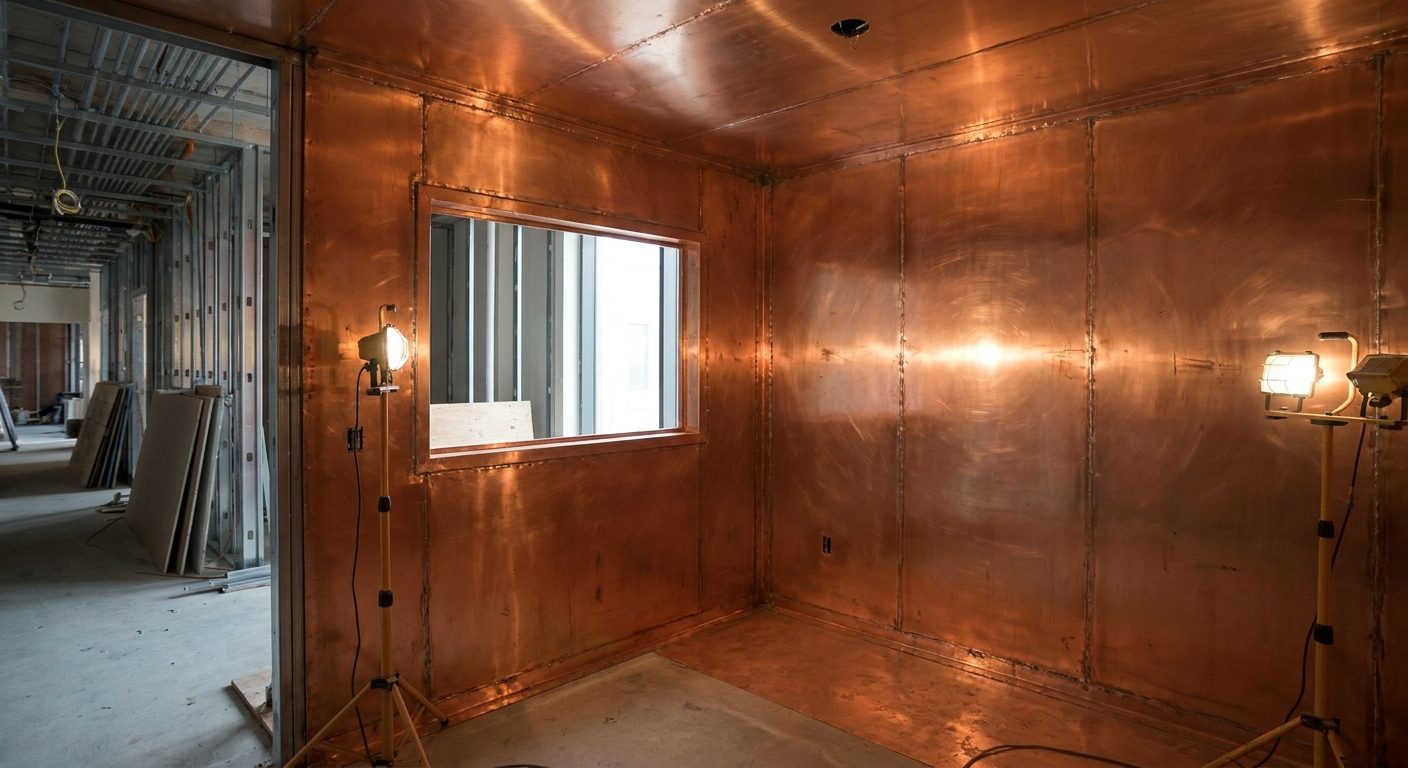
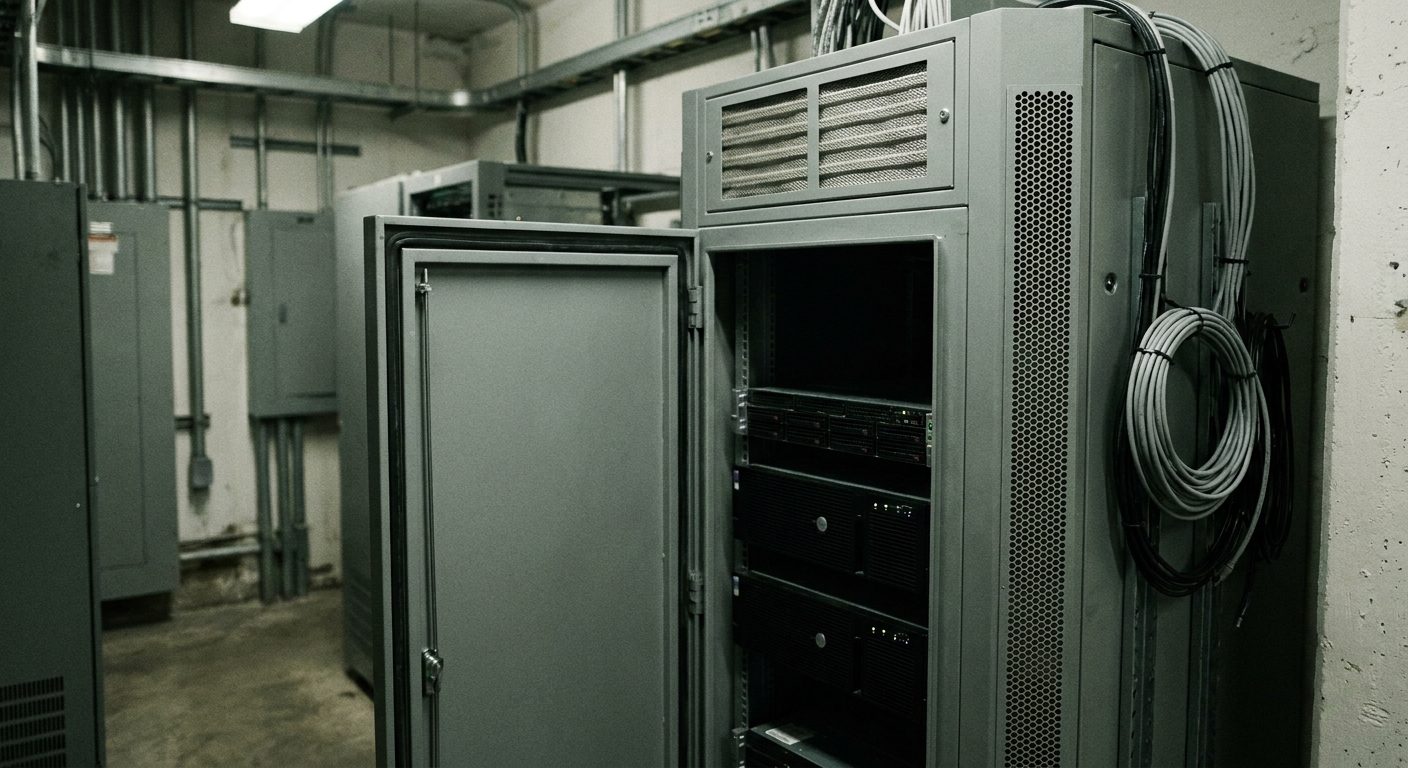
Applications
Where shielded enclosures are used
Any time a measurement, a device, or a conversation has to be kept apart from the radio signals around it, a shielded enclosure is the tool.
EMC pre-compliance and compliance testing
Measuring a product's emissions and immunity in a quiet electromagnetic environment before it goes to, or as part of, formal certification testing.
Wireless device and IoT testing
Isolating phones, radios, modules, and connected products so each test sees only its own signal, from development benches to high-volume production lines.
Digital forensics
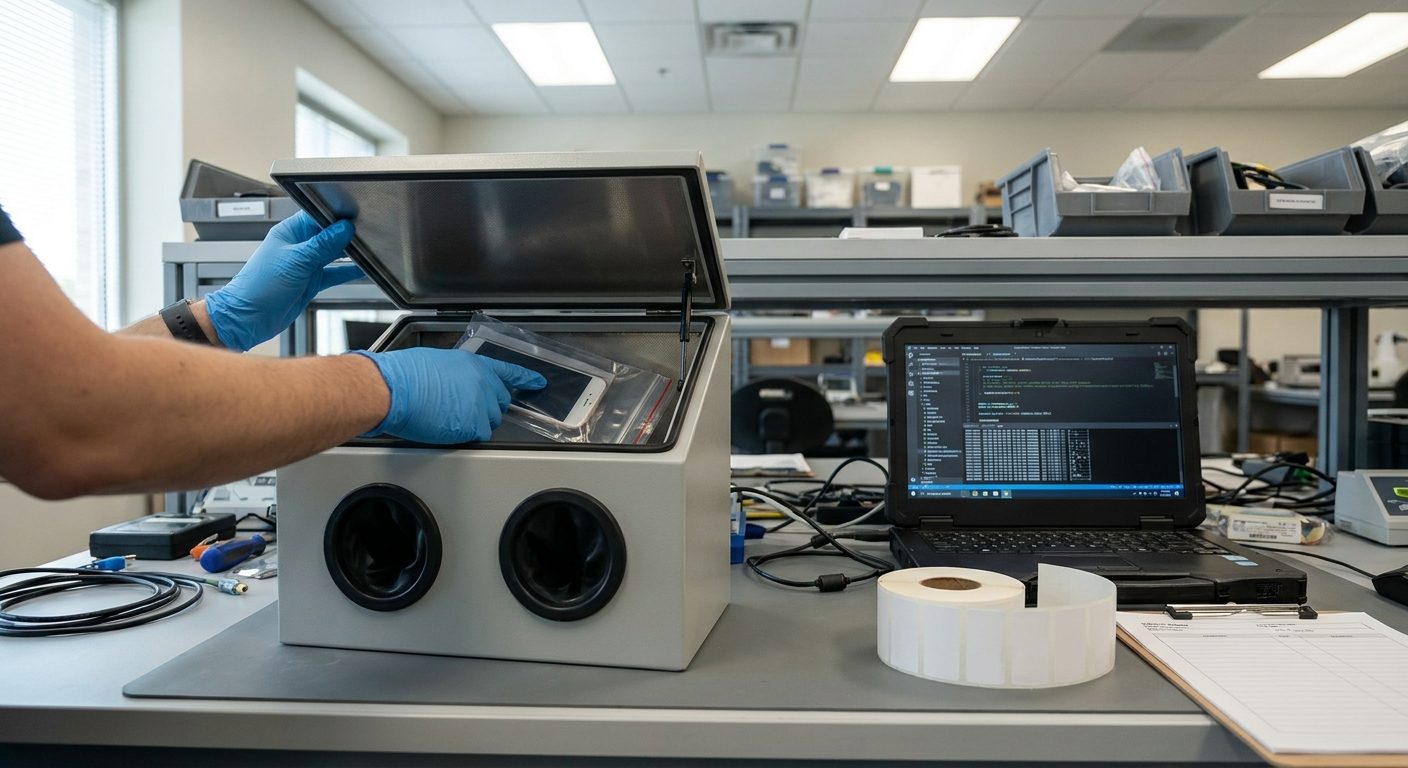
Keeping seized phones and tablets cut off from cellular, Wi-Fi, and Bluetooth networks while examiners work, so remote wipe or new data cannot reach them.
Secure communications
Rooms and cabinets that contain emissions from sensitive equipment and keep outside signals from reaching it, in government, defense, and corporate facilities.
Medical imaging
MRI suites, where outside RF interference shows up as image artifacts and the room shield is part of the scanner installation.
Research and aerospace electronics
Sensitive measurements, antenna and receiver work, and testing of avionics and defense electronics against their interference requirements.
Specifying an enclosure
What to settle before you request a quote
| Factor | What it decides |
|---|---|
| Frequency range | The lowest and highest frequencies you need to block or test at. Low-frequency magnetic fields are the hardest to shield and can change the whole design. |
| Attenuation target | How much shielding you need across that range, stated in dB. Ask how the figure is measured and at which frequencies, not just for a single headline number. |
| Size and contents | What goes inside: a single device, a rack of equipment, people and test benches. This decides between a box, a cabinet, a tent, or a walk-in room. |
| Connections | Every cable that must enter: RF, data, power, air, water. Each one needs a filter, connector panel, waveguide, or fiber feedthrough planned in advance. |
| Access and use | How often the door opens, whether equipment rolls in, and whether the enclosure sits on a production line. Doors and lids wear with use and are built differently for heavy traffic. |
| Site and acceptance | Floor loading, ceiling height and power for a room; how the enclosure will be tested on completion, commonly to IEEE 299, and how often it will be re-tested. |
Installing and verifying
A shielded room project, step by step
- 1Survey the site and the signals you need to keep out or in, including any strong nearby sources.
- 2Lay out the enclosure with every door, filter, vent, and penetration placed before construction.
- 3Build the shell and bond every seam, then fit the door, filters, and vents.
- 4Test the finished enclosure across the required frequencies, commonly using the IEEE 299 method for rooms.
- 5Keep records and re-test on a schedule, and after any change to the walls or penetrations.
Keeping the shield working
- Route every cable through a filter, connector panel, or fiber feedthrough. One unfiltered cable can undo the whole shield.
- Never drill a new hole in a wall or panel without a planned, shielded penetration.
- Keep door gaskets and finger stock clean and undamaged, and replace them when they flatten or break.
- Check the door closes and latches fully every time; a door left slightly open is a large leak.
- Bond and ground the enclosure as designed, and keep the design documents with the room.
- Re-test after moves, repairs, or new penetrations, not just on the original acceptance date.
Testing a room: IEEE Std 299 describes how to measure the shielding effectiveness of enclosures. It replaced the older MIL-STD-285 method, which some specifications still mention.
Information only. The guidance on this page is general and educational. It is not engineering, electrical, security or safety advice and does not replace the manufacturer's instructions, your test and security requirements, applicable codes and standards, or a qualified professional. Verify all information before relying on it. Read the full disclaimer.
FAQ
Shielded enclosure questions
What is a shielded enclosure?
A shielded enclosure is a box, cabinet, tent, or room whose walls form a continuous conductive barrier against radio frequency (RF) and electromagnetic interference (EMI). It keeps outside signals from reaching what is inside, and keeps signals from inside from getting out. Common types include benchtop RF test enclosures (shield boxes), walk-in shielded rooms, Faraday tents, and shielded racks and cabinets.
Is a shielded enclosure the same as a Faraday cage?
It works on the same principle. A Faraday cage is the general idea of a conductive enclosure that blocks external electric fields. A shielded enclosure is a practical product built on that idea, with engineered doors, filtered cable entries, and shielded vents so it can be used every day while keeping its performance.
What does an attenuation figure in dB mean?
Shielding effectiveness is the ratio between the field strength without the shield and with it, expressed in decibels. Every 20 dB is a tenfold reduction in field strength, so 60 dB means the field inside is about one thousandth of the field outside. Figures are quoted across a frequency range, and often separately for magnetic fields, electric fields, and plane waves, so compare them at the frequencies you actually care about.
What frequency range do shielded enclosures cover?
It depends on the enclosure. Many are specified from the low kHz range up into the GHz range, while benchtop shield boxes are often specified for the cellular, Wi-Fi, and other wireless bands their users test. Low-frequency magnetic fields are the hardest to block and may need thicker or magnetic metals, so state the lowest frequency you need when you ask for a quote.
What is the difference between a shield box and a shielded room?
A shield box is a closed benchtop or rack-mounted enclosure for one device or a board, used heavily in wireless device development and production testing. A shielded room is large enough for people and equipment, usually built from modular panels inside a building, and is used for EMC testing, secure communications, and other work that does not fit in a box.
Why do doors and cable entries matter so much?
The walls of a well-built enclosure rarely limit its performance. Gaps do. Door seals, seams between panels, cable penetrations, and vents are where signals leak. Doors use finger stock, knife-edge contacts, or inflatable seals; cables pass through filters or fiber optic feedthroughs; and vents use honeycomb waveguides that pass air but block RF below their cutoff frequency.
How is a shielded room tested?
Shielding effectiveness of enclosures is commonly measured with the method in IEEE Std 299, which replaced the older MIL-STD-285. A transmitter is placed on one side of the wall and a receiver on the other, and the signal is compared with and without the shield at the specified frequencies. Rooms are tested on completion and should be re-tested periodically and after any change.
Can I add a new cable or penetration later?
Yes, but it has to be done through a proper shielded penetration such as a filter, a bulkhead connector, a waveguide, or a fiber feedthrough, ideally by the enclosure supplier. Drilling a hole and passing a cable through can let in enough interference to undo most of the shielding. Re-test after the change.
When is a Faraday tent a better choice than a rigid enclosure?
A Faraday tent made of metallized fabric folds for transport and sets up quickly, so it suits temporary test areas, field work, and digital forensics teams that move between sites. Rigid steel or panel enclosures generally hold their performance better over years of heavy daily use and accept more doors, filters, and equipment.
How is MRI shielding different from EMC shielding?
An MRI RF shield is built into the walls, floor, and ceiling of the scanner room to keep outside radio signals from showing up as image artifacts. Scanners work at specific frequencies, around 64 MHz for a 1.5 tesla magnet and 128 MHz for 3 tesla. The shield is part of the scanner installation, and the magnetic field itself is handled separately by the magnet design and, where needed, separate magnetic shielding.
What does a shielded enclosure for digital forensics do?
Forensics teams isolate seized phones and tablets from cellular, Wi-Fi, and Bluetooth networks so they cannot be remotely wiped or receive new data while they are examined. Benchtop enclosures with glove ports, Faraday tents, and shielded rooms are all used, depending on how many devices are handled and where.
What should I send to get a quote?
Describe what goes inside the enclosure, the frequency range and attenuation you need, the cables and utilities that must enter, how often it will be opened, and where it will be installed. For rooms, include approximate dimensions and ceiling height. That is enough for a supplier to suggest a type and size and come back with a quote.
Request a quote
Get a shielded enclosure quote
Whether you need one benchtop shield box or a walk-in room, tell us what goes inside, the frequency range, and the cables that need to come in. We will get a quote back to you.
- Benchtop RF test enclosures and shield boxes
- Walk-in shielded rooms, Faraday tents, and shielded cabinets
- Doors, filters, vents, and penetrations for existing rooms